

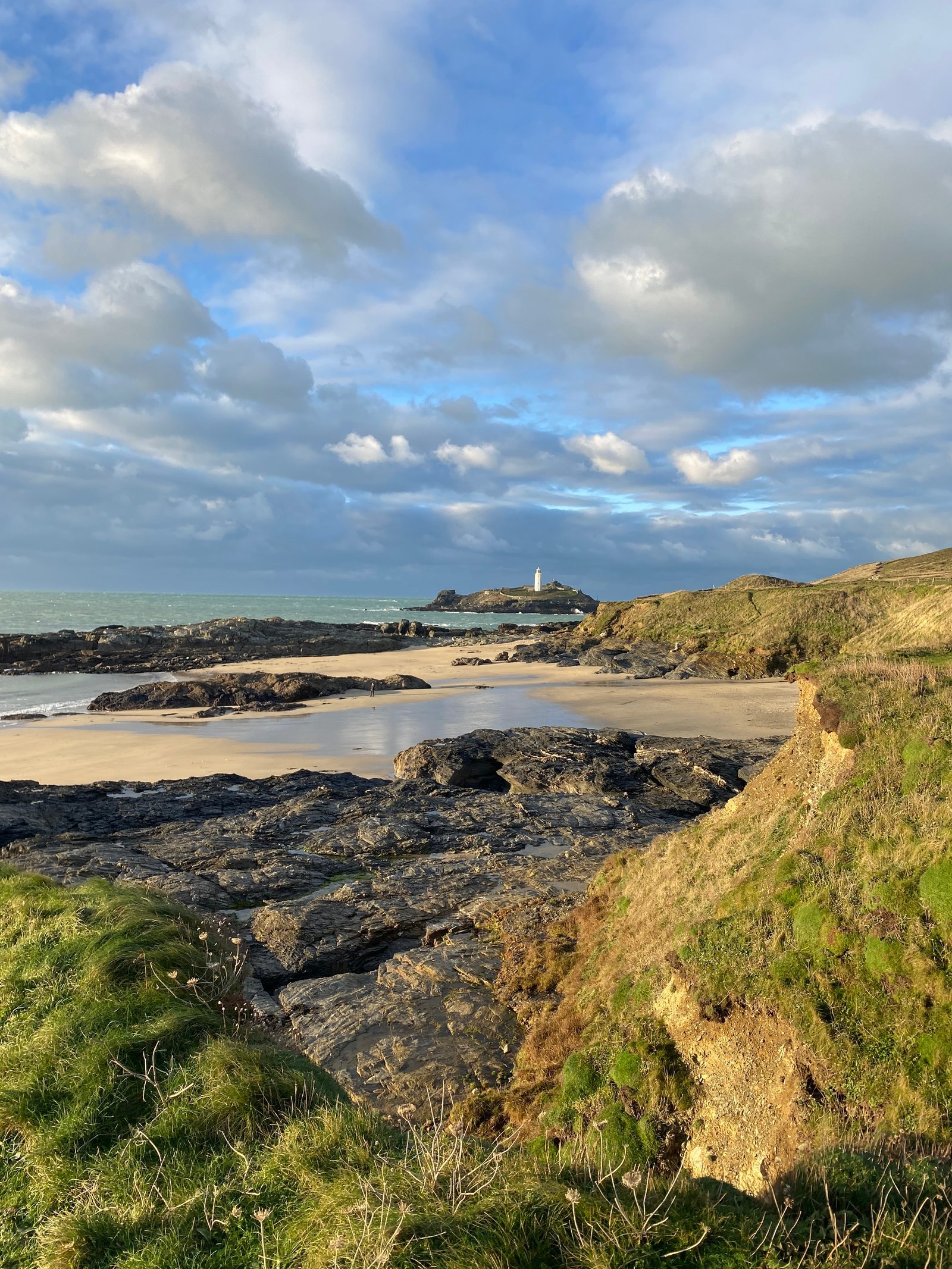
A painter's guide to the Cornish coast — St Ives, Bedruthan, Wheal Coates, Charlestown, Fowey, Kynance — and how to paint each one without painting the postcard.
Cornwall has been drawing painters for over a century, and for good reason. It's the light, mostly — that clean, sea-washed light the St Ives painters built a whole movement around. But it's also the variety: in an hour you can go from a working harbour to a clifftop engine house to a turquoise cove that doesn't look like England at all.
The risk with a famous view is that you paint the postcard — the same composition a thousand people made before you. This is a guide to six of the best spots and, more usefully, how to find your own picture once you're there. Most of these I've ridden to; all of them reward the painter who arrives with their eye switched on rather than their camera.
St Ives
The obvious one, and obvious for a reason. The light here is genuinely different — softer, brighter, bounced off water on three sides — which is exactly why the modernists colonised the place. Whistler and Sickert painted here; later, Hepworth, Nicholson and a whole school followed; the Tate didn't land here by accident.
What to paint: resist the harbour-and-boats cliché on your first pass. The better pictures are in the light itself — white cottages stacked up the hill, the way the sea glare flattens everything into pale shapes, the long view across the bay from the Tate end. Squint and you'll see it's a town built of values, not details.
Painter's note: go early. The crowds are real and the parking is worse — which, frankly, is another argument for two wheels.
Bedruthan Steps
Drama with a capital D. The great rock stacks marching out into the surf, the cliffs falling away, the tide racing in. This is the place to paint scale and power.
What to paint: the stacks are the obvious subject — and they work — but the real lesson here is tone. On a bright day the stacks go almost black against a blazing sea, and the whole picture becomes a study in dark shapes against light. Don't overcomplicate it. Three or four big tonal masses and you've got it.
Painter's note: the steps down to the beach are steep and seasonal, and the tide is no joke here. Paint from the top. The view is better anyway.
St Agnes & Wheal Coates
This is mining-coast Cornwall at its most paintable: the Towanroath engine house at Wheal Coates perched on the cliff above the Atlantic, gorse and heather running down to the sea. The St Agnes Beacon and the coastal path around it is a stretch I've walked at sunrise more times than I can count.
What to paint: the engine house against the sea is the signature shot — a single strong vertical man-made shape in a vast natural one. That contrast is the picture. In late summer the heather turns the whole hillside purple and the colour problem becomes a joy. Catch it at golden hour and the granite glows.
Painter's note: it's exposed up there — wind will dry your wash before you've finished it and try to take your paper with it. Clip everything down. A small page is your friend.
Charlestown
A perfectly preserved Georgian harbour, tall ships often moored in it, the whole place looking like a film set — because it frequently is. If you want boats, masts, ropes, and reflections, this is your spot.
What to paint: the tall ships are irresistible, but masts and rigging are a beginner's trap — a forest of fiddly lines that kills a painting. Suggest the rigging, don't draw it. Get the dark hull, the reflection, the tonal drama of the harbour walls, and let two or three lines imply the rest. Less rigging, better picture.
Painter's note: sheltered, which makes it a good foul-weather choice when the clifftops are unpaintable. There's coffee. You can sit.
Fowey
A deep, wooded estuary town — softer than the north coast, all layered hills, sailing boats, and water that goes silver in the afternoon. The mood here is gentle where Bedruthan is brutal.
What to paint: estuary light is about layers — receding hills getting paler and bluer as they go back (that's aerial perspective, and Fowey teaches it for free). Keep your foreground warm and dark, push the distance pale and cool, and the depth paints itself. Boats on silver water are the bonus.
Painter's note: the views across to Polruan from the town side are the pick. A passenger ferry crosses if you want the other angle.
Kynance Cove
The showstopper. Serpentine rock in greens, reds and purples, white sand, and that impossible turquoise water — the Lizard at its most un-English. On the right day it genuinely doesn't look real.
What to paint: the temptation is to crank the turquoise to eleven and lose all subtlety. Don't. The picture works because of the contrast — dark serpentine stacks, pale sand, and then the colour sings against them. Get your darks and lights right first; let the colour be the reward at the end. Mix that turquoise, don't use it straight from the pan.
Painter's note: strongly tidal — the famous sand and the best stacks are a low-tide show. Check the tide times before you commit the ride, or you'll paint a car park.
A word on painting the famous view
Every one of these places has a "correct" picture that everyone makes. Your job is to walk past it.
Arrive early, walk further than the first viewpoint, and look for the composition the car-park crowd never sees — the side-on angle, the bit of foreground nobody bothers with, the moment the light does something odd. The best Cornwall paintings aren't of the famous spot. They're of a moment at the famous spot that only you happened to be standing in.
Get there under your own steam, get there early, and the picture is yours.
Part of the Cornish Cycling Sketcher series. If you'd like to paint these with me rather than alone, the workshops run from the Cornish Craft Barn near Truro — details on the site.