

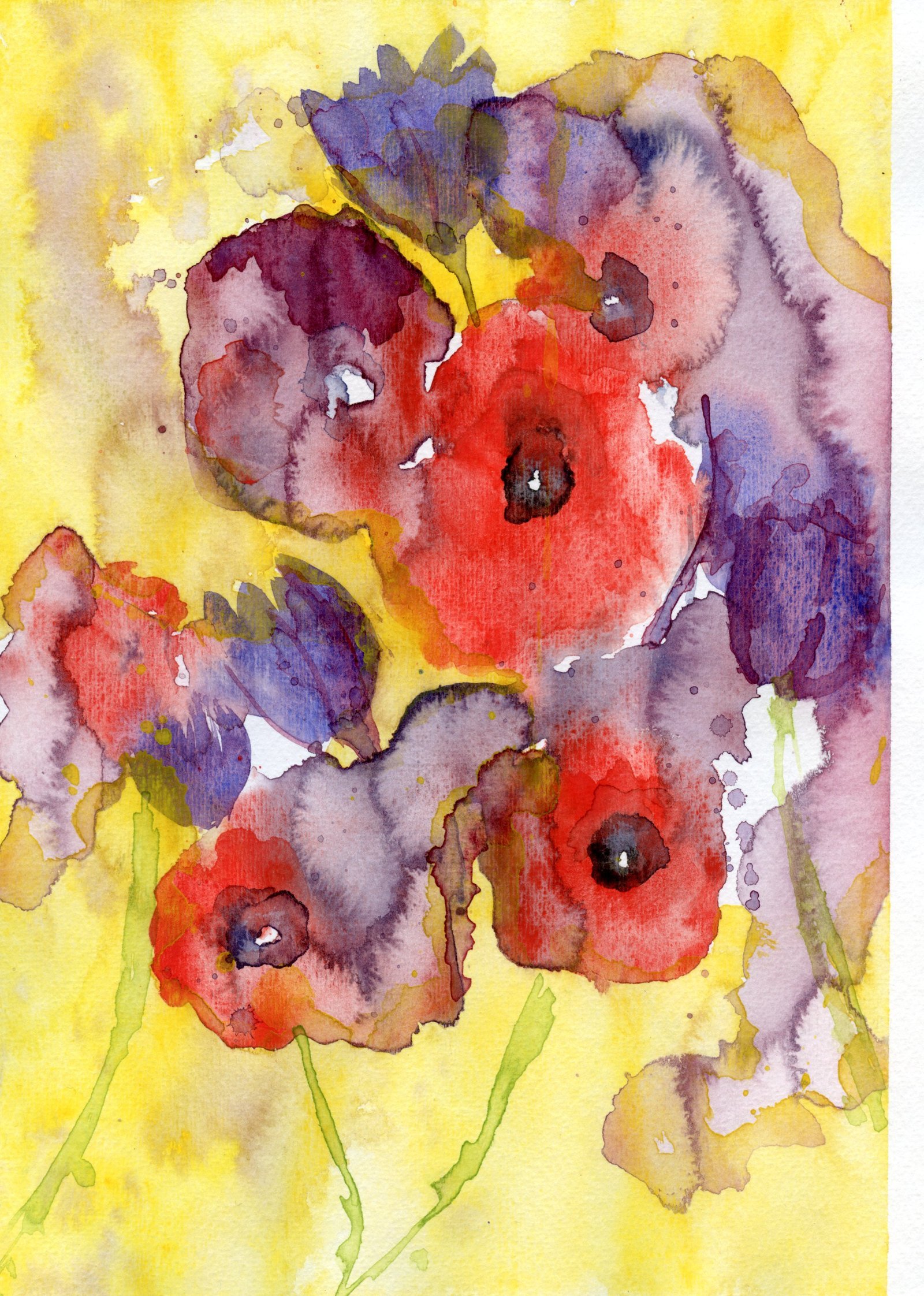
The one habit that fixes most watercolour mistakes — and it costs you nothing but a second of looking.
If I could give a beginner just one watercolour habit, it wouldn't be a fancy brushstroke or a clever colour mix. It would be this: before every mark you make, look at the paper.
Is it shiny, or is it matte?
That's the whole thing. Two states. And almost every watercolour mistake I see in the workshop comes down to a painter who didn't check which one they were working into.
The Two States That Matter
When the surface of the paper is shiny — when it's catching the light, reflecting it back at you — it's wet. Anything you put down now is going to spread, blend, and bloom into what's already there. This is wet-in-wet, and it's where watercolour does its most beautiful, uncontrollable work. Colours meet and soften. Edges disappear. The paint finds its own shapes.
When the surface is matte — no reflection, no shine — it's dry. Anything you add now will sit on top with a hard, clean edge. This is wet-on-dry, and it's how you build detail, depth, and definition.
Both are good. Both are useful. The trouble is never the technique. The trouble is using the wrong one because you didn't look first.
Where It Goes Wrong
Here's the classic mistake, and I've made it myself more times than I'd like to admit.
You've laid a lovely wash. It's looking good. And you decide — while it's still drying, that awkward in-between stage — to drop in a second colour, or add a little detail. You touch the brush to the paper and you get a hard-edged bloom. A cauliflower. A tide mark blooming out across your nice clean wash.
And the worst part? You usually can't fix it. Going back in to smooth it over only makes it worse. That area is now done, whether you like it or not.
What happened is that you painted into a surface that was neither properly wet nor properly dry. It looked safe. It wasn't. You didn't check.
Train Yourself to Look
The fix is almost insultingly simple: look at the paper before you load the brush. Tilt your head so the light catches the surface. Shiny means wet — expect spread. Matte means dry — expect a hard edge. If you can't tell, the answer is almost always to wait.
Watercolour dries faster than it looks, especially in a warm room. That in-between stage — damp but no longer shiny — is the danger zone, and the only safe move there is patience. When you're unsure, wait longer. The paper will tell you when it's ready, if you let it.
This sounds like nothing. It is, in fact, the difference between a painter who fights the medium and one who works with it. Watercolour isn't unforgiving of loose marks or expressive shapes — it loves those. It's unforgiving of overworking and going back in at the wrong moment.
So before the next mark, just look. Shiny is wet. Matte is dry. Get into the habit of checking, and you'll fix more of your watercolour problems with that one second of attention than with any amount of new kit.
Then load the brush — and trust what the paper just told you.